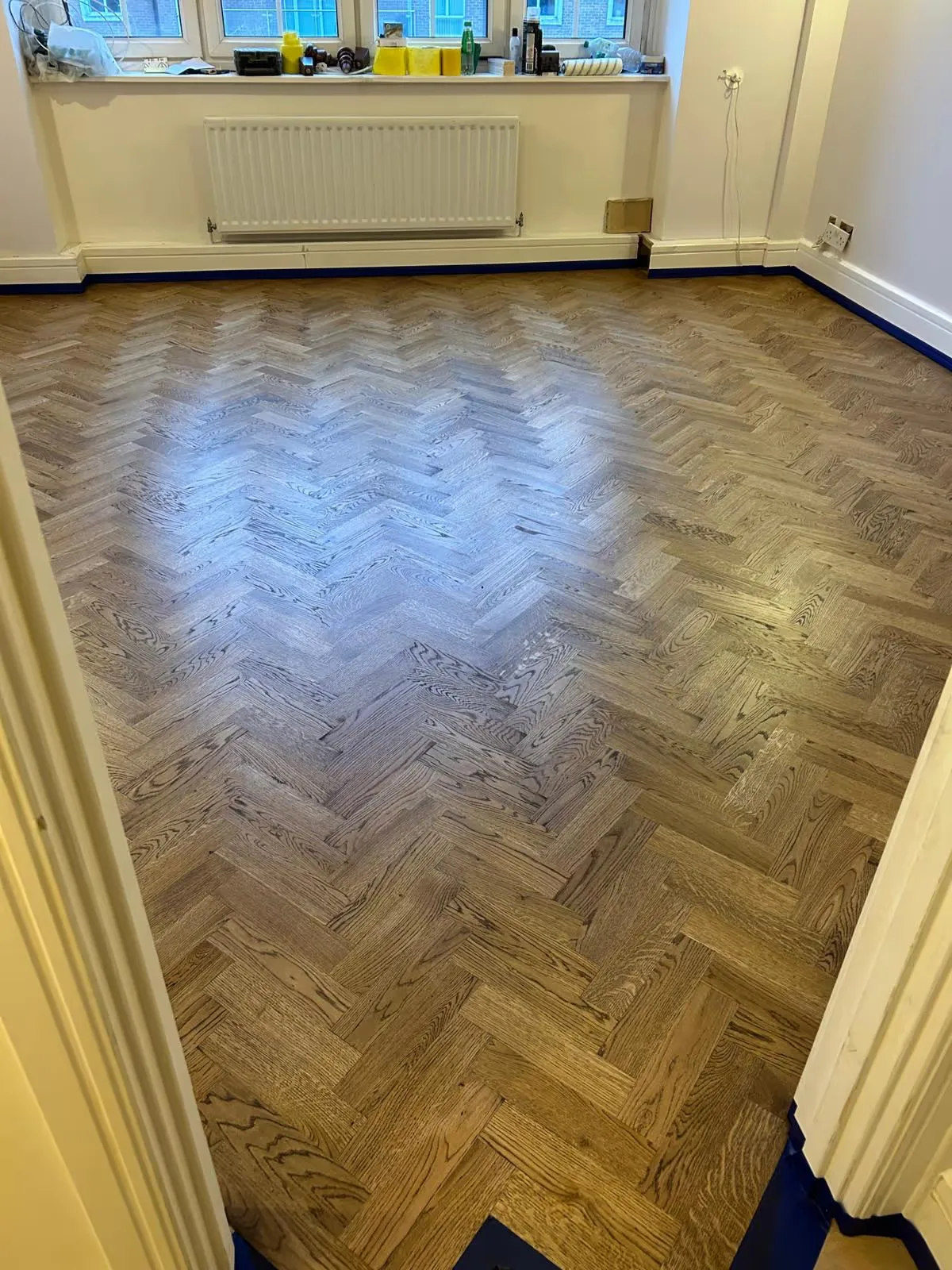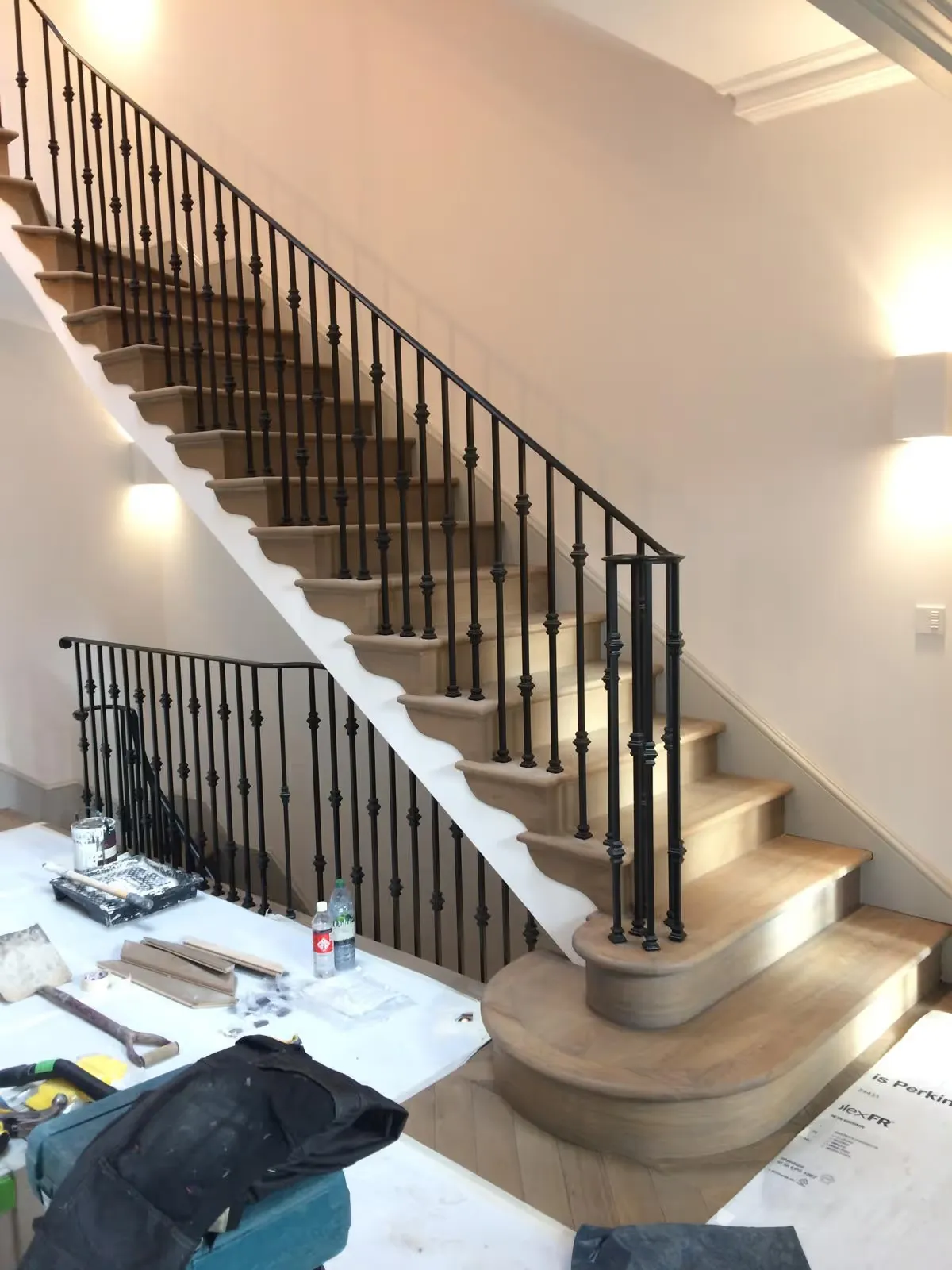
Chevron floors with perfectly aligned points
Chevron – sometimes called French herringbone – has the ends of every board cut at an angle, so the pattern forms a clean, continuous point rather than a zig-zag.
It looks effortless when it’s done right, but every point has to meet exactly. I lay chevron from a precise centre line and check the alignment board by board.
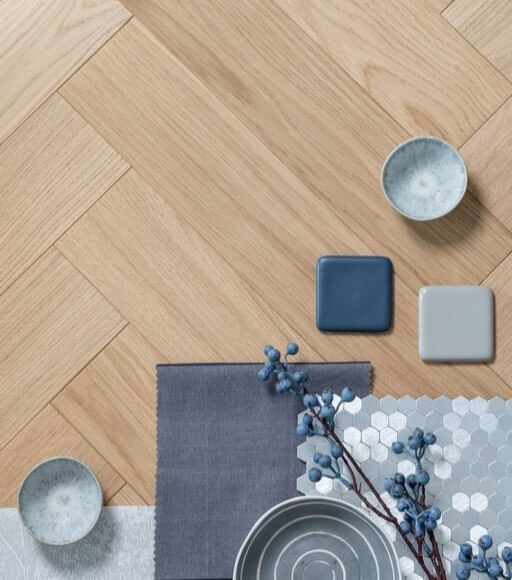
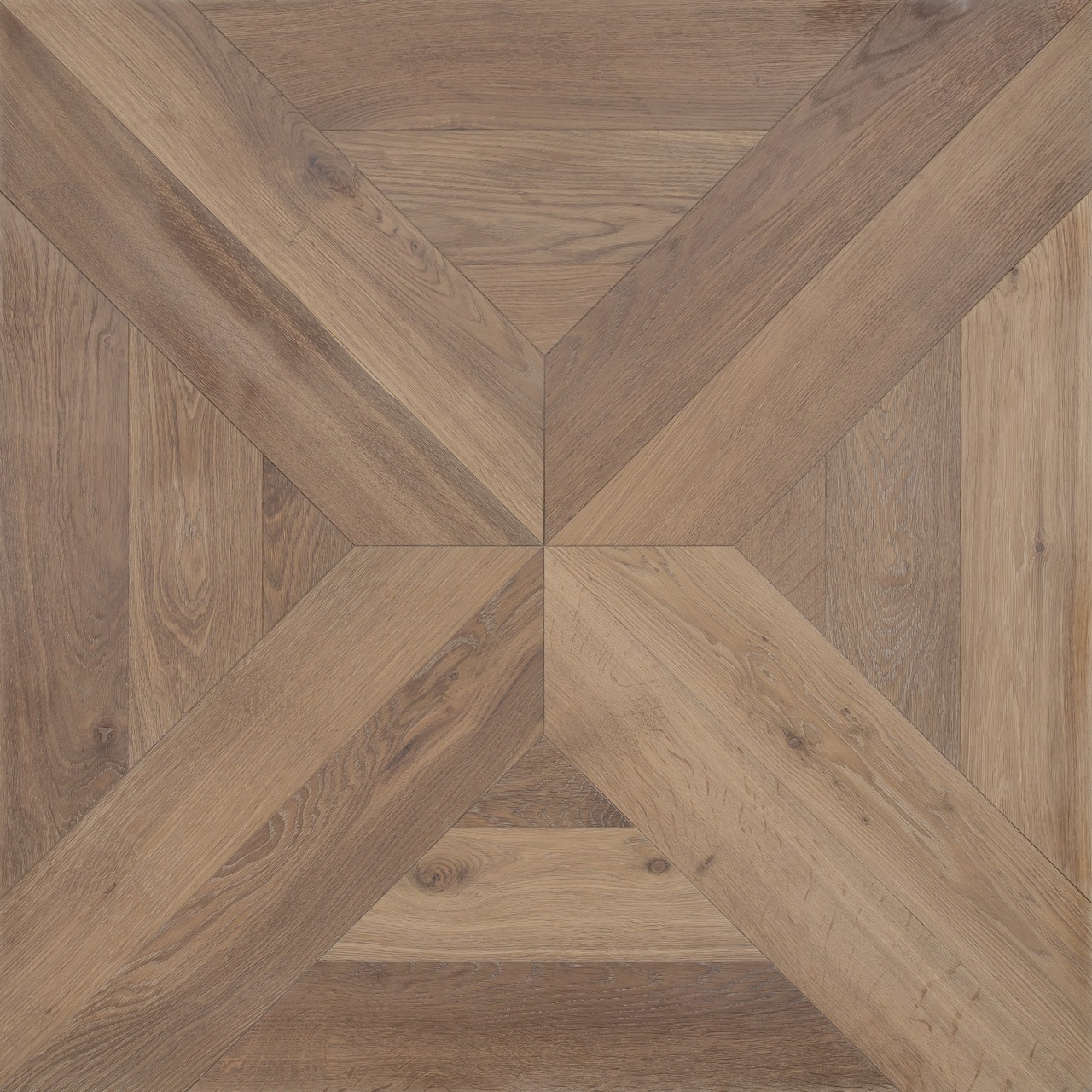
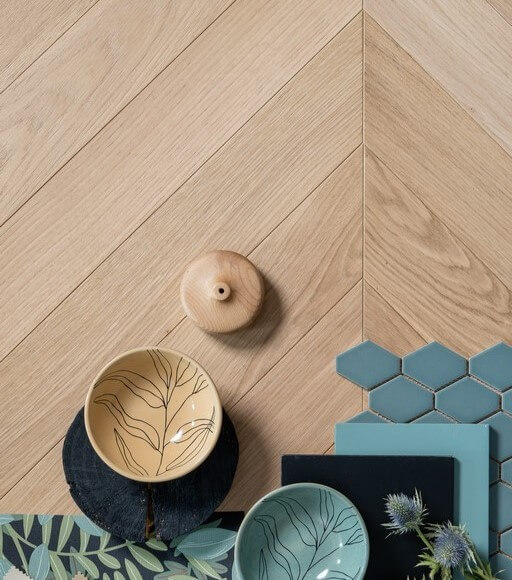
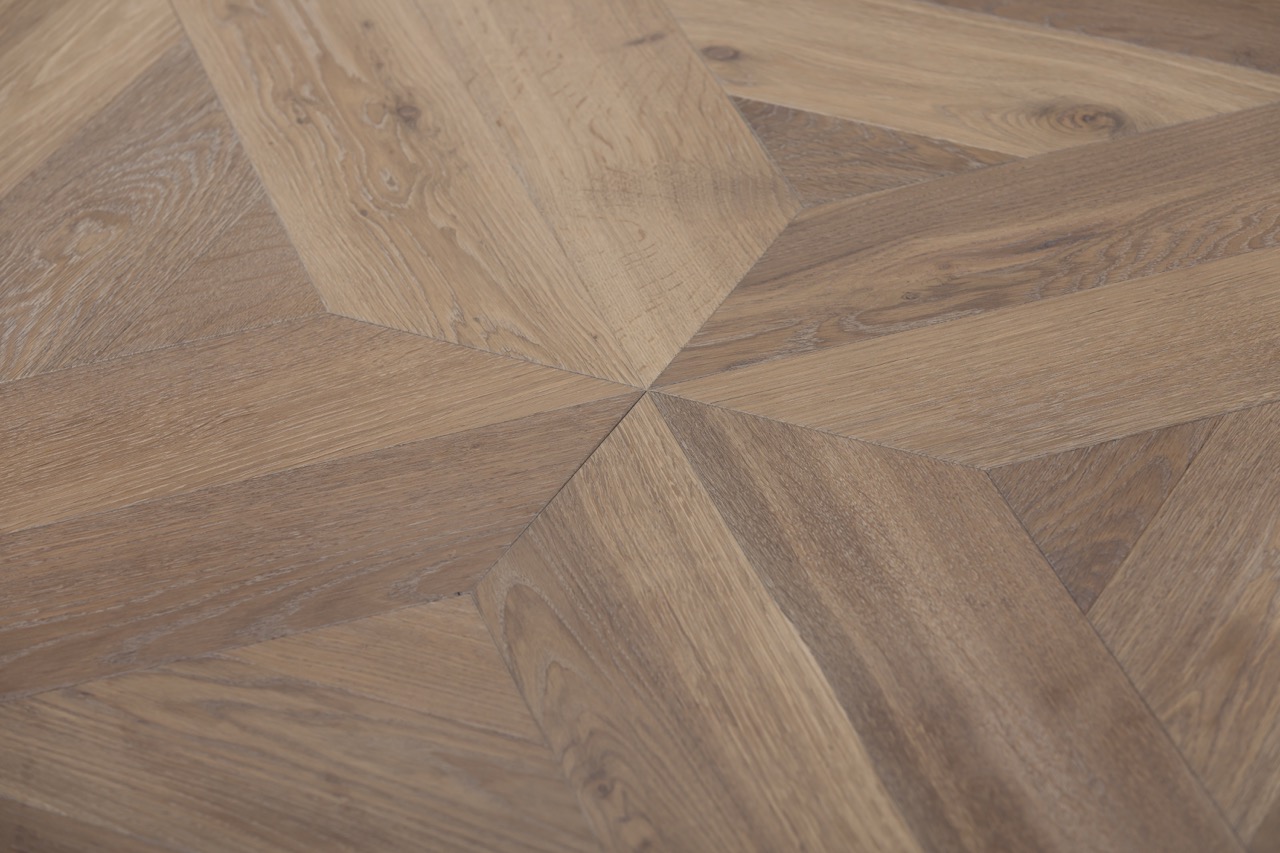
How I fit a chevron floor
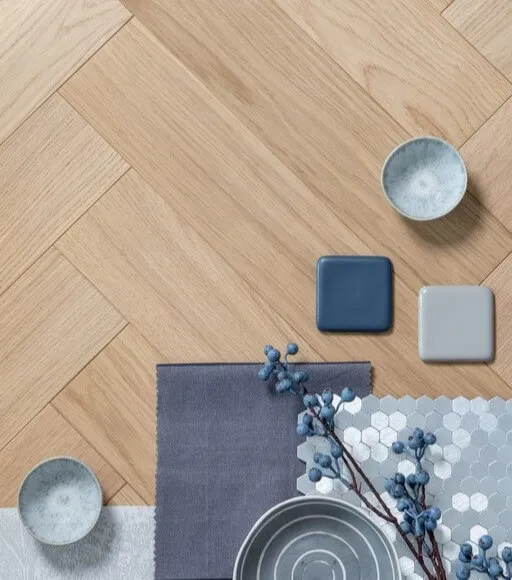
I check the room and subfloor and decide which way the points should run – usually towards the main light or along the longest wall.
A flat, dry, solid base is essential, so the boards can be fully glued and the points stay tight.
Chevron is set out from an exact centre line, then every board is glued and checked so the points meet cleanly.
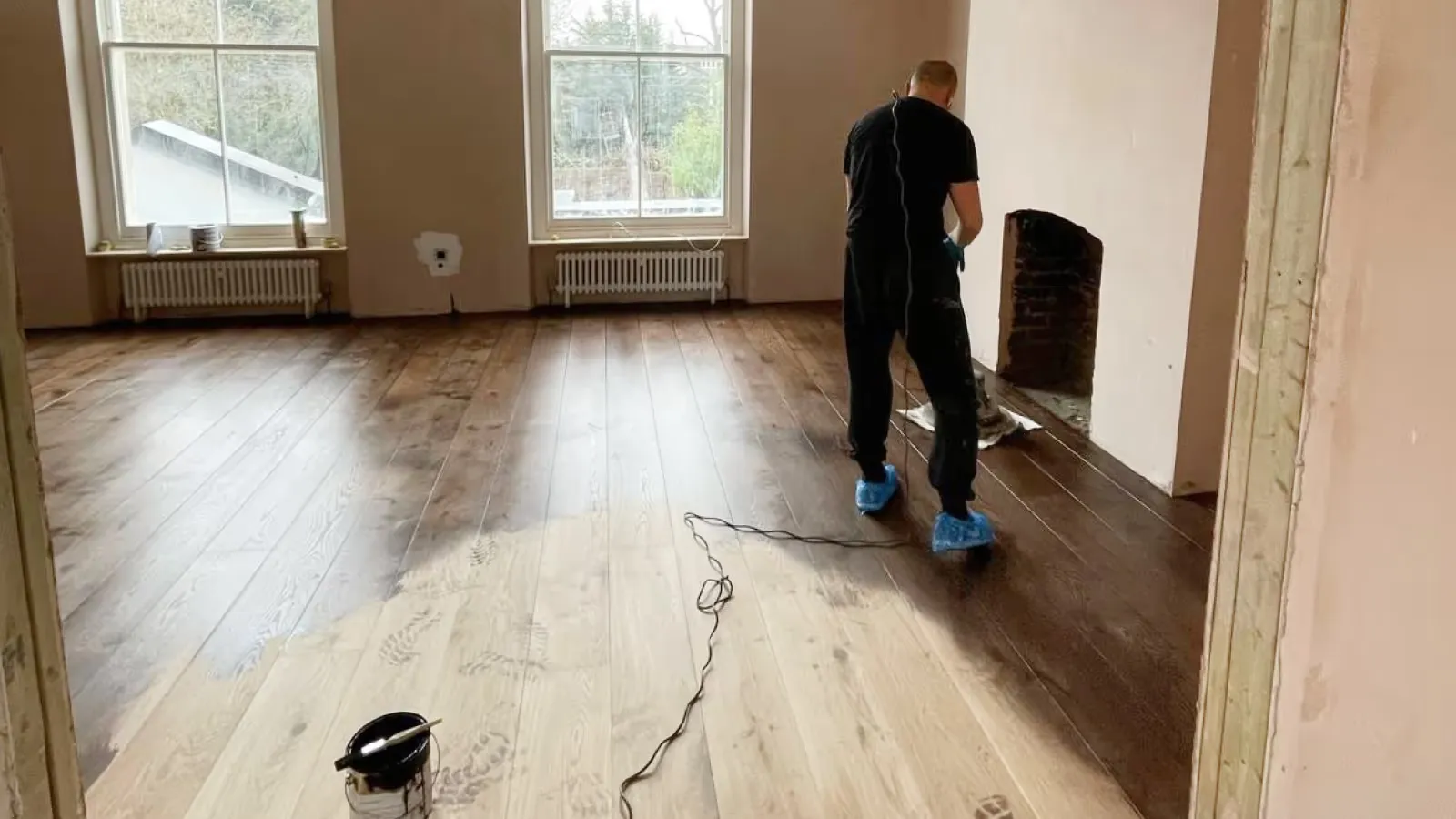
Factory-finished boards are ready to use; raw boards are sanded and oiled or lacquered on site.
Chevron options
– small changes in angle and size give a very different character.
45° chevron
The classic French herringbone: a strong, elegant point that suits period and modern homes.
Shallower angle chevron
A lower angle, sometimes called Hungarian point, gives a softer, more stretched pattern.
Engineered oak
Stable, ideal over underfloor heating and available pre-finished for a faster installation.
Solid oak
For a floor that can be sanded and refinished many times over the years.
Colours & finishes
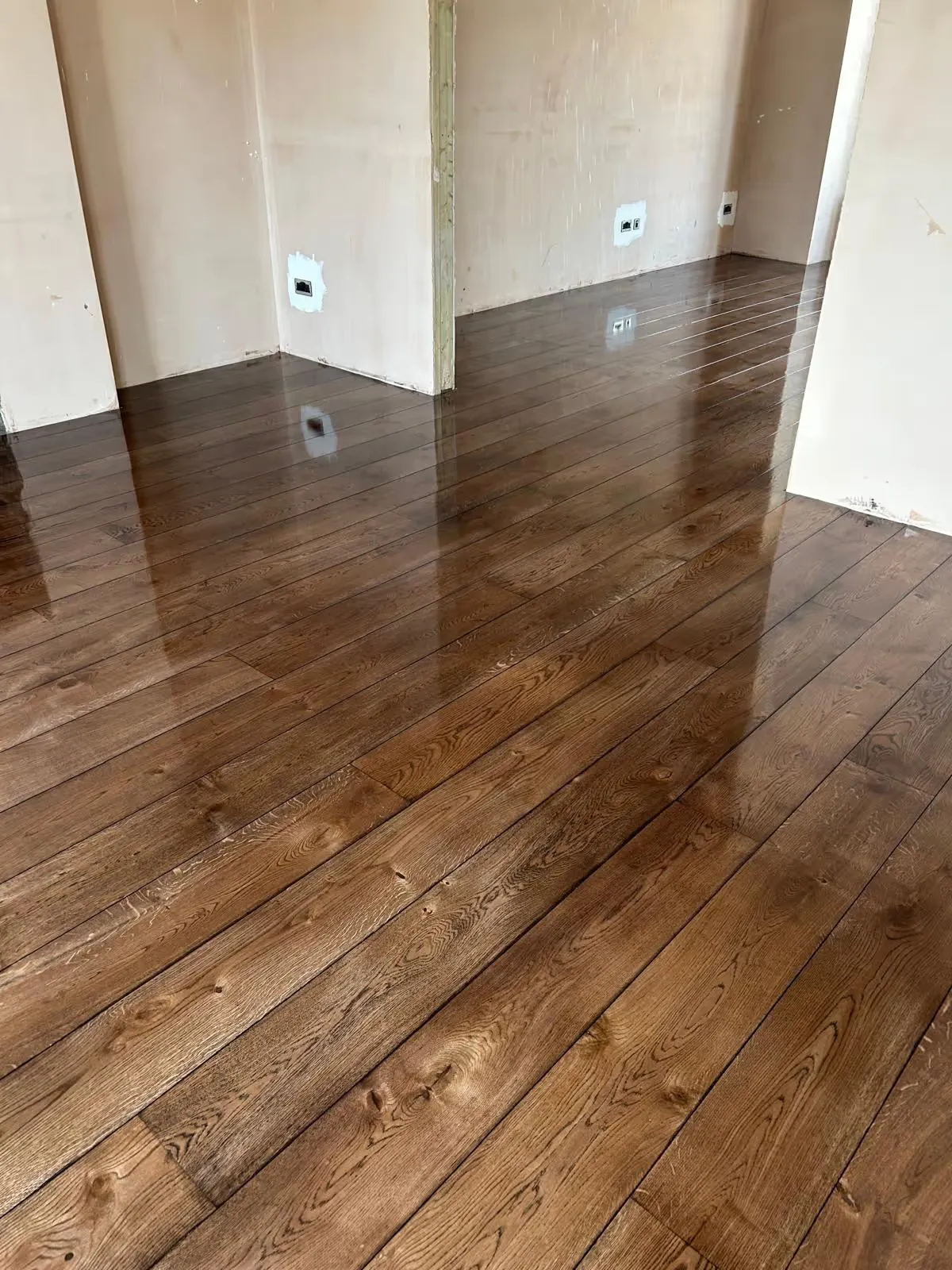
Natural, white-washed, smoked or stained tones, with oil, hardwax oil or matt lacquer.
Choosing the right chevron
Direction is everything
With chevron, the direction of the points changes how the room feels. Pointing them towards the main window or along a corridor creates movement and depth; running them across a narrow room can make it feel wider. Before any board is glued I plan the direction, the centre line and the cuts at doors and fireplaces.
Engineered or solid
Most chevron floors I fit today are engineered oak: a real oak wear layer on a stable core. It’s the best option over underfloor heating and on concrete subfloors. Solid oak chevron is ideal where you want the longest possible life and the option to sand it many times.
Finishes that suit the pattern
- Natural oil keeps the grain soft and matt – perfect for a calm, Scandinavian look.
- Matt lacquer protects busy family spaces and kitchens.
- Smoked and stained tones give the pattern more contrast and a classic Parisian feel.
Pre-finished or finished on site
Pre-finished chevron is ready to walk on straight after fitting. Raw boards are sanded flat after laying and finished on site, which gives a perfectly smooth, seamless surface. I’ll recommend the right option for your room, budget and timeline.
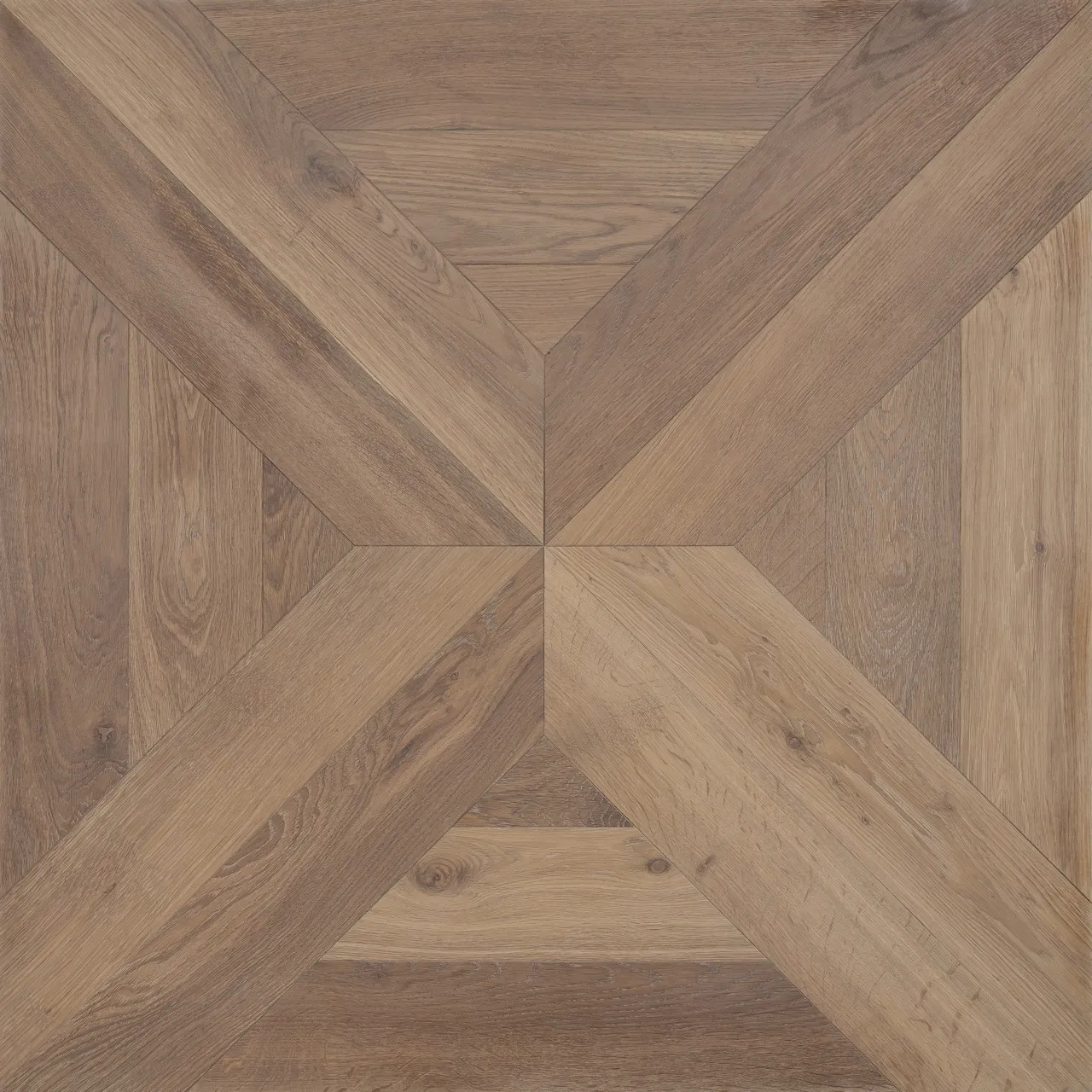
Panels for this look
Frequently asked questions
What’s the difference between herringbone and chevron?
Herringbone boards are cut square and overlap in a zig-zag. Chevron boards are cut at an angle at the ends, so they meet in a clean point and form a continuous V.
Is chevron suitable for underfloor heating?
Yes, engineered oak chevron is a very good match for underfloor heating when it’s fully glued to a prepared subfloor.
Does chevron make a room look bigger?
It can. Running the points along the longest wall or towards a window draws the eye through the space and makes it feel longer.
Can I have chevron pre-finished?
Yes. Pre-finished boards are oiled or lacquered in the factory, so the floor can be used as soon as it’s fitted.